
Still Using Static Photos for Custom Products? Try 3D Visualization
Static photos fall short for customizable products. A 3D visualizer shows every configuration accurately so buyers know exactly what they’re choosing. Learn more.

Static photos have been the default way to present products online for years. For simple products, they can still work. But once a product becomes customizable, static photography starts to fall apart. It cannot keep up with thousands of possible combinations, and it often leaves buyers guessing how a configuration would look like.
This is one of the most common patterns we see when manufacturers reach out to us for a 3D configurator. Their website usually shows a few static images or a handful of photos of finished products. But the gap between what buyers see and what they can order becomes impossible to bridge with a photo gallery.
Industry research also shows that shoppers expect more clarity than static images can provide. BigCommerce reports that interactive 3D and 360° product views can increase conversion rates by up to 40%, because buyers understand products more quickly and with fewer questions.
Let’s break down why static photos fall short and how 3D visualization improves the experience for everyone involved.
Why Static Photos Don’t Work for Custom Products
The issue with static photos isn’t the effort put into them. Many brands invest in beautiful photography. The problem is that even the best photo captures only one version of a product. As soon as a product has customizable size, material, or options, the photo no longer represents what the buyer is actually choosing. Think about:
- A cabinet line with 10 widths, 3 heights, 5 finishes, 4 door styles
- A modular storage system built from segments and add-ons
- A railing system with different post types, infills, and mounting options
To represent all combinations in photos, you’d need thousands of images. No one can do that. It's too expensive and impossible to maintain.
One polished photo might look impressive, but it doesn’t communicate how the layout behaves when extra sections are added or when the height changes. Even something as simple as a dining table becomes unclear when the catalog image only shows one combination of finish and length.
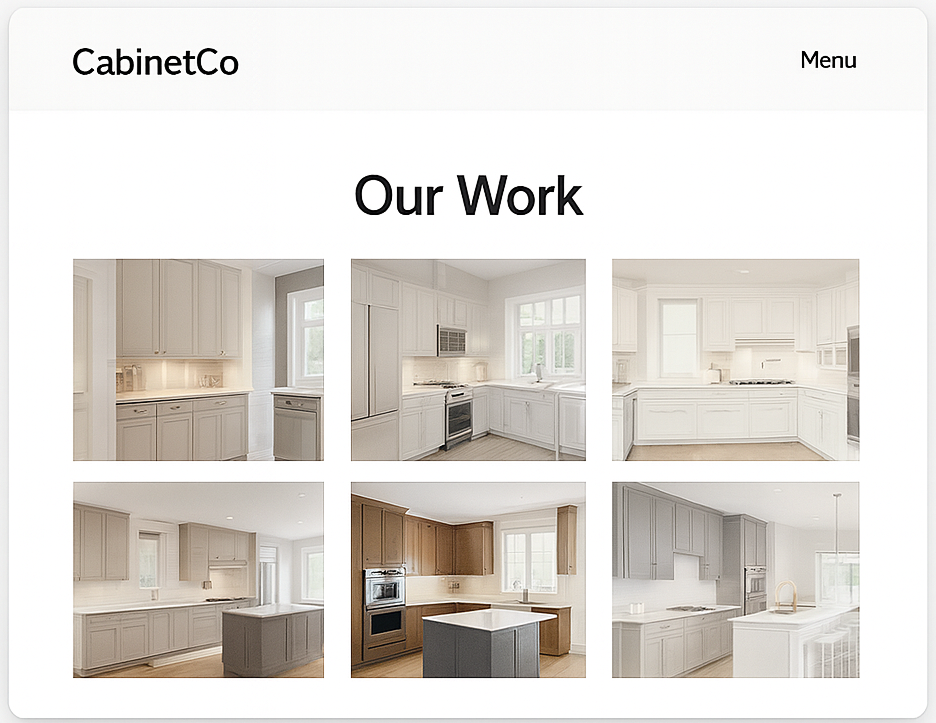
That disconnect creates friction, hesitation, and unnecessary support conversations because the visual format simply isn’t built for customizable products. When the product is flexible and the image is fixed, the experience breaks.
What is a 3D Visualizer?
A 3D product visualizer (also called 3D product viewer) is a web-based product viewer that lets buyers visualize a product from every angle directly on the product page. They can rotate the model, zoom in, and see proportions clearly.
For manufacturers, a 3D visualizer solves the problem of showing products that come in many variations. Instead of creating separate photos for every size, finish, or configuration, the 3D product viewer presents one interactive model that adapts visually as options change. This is why brands with broad catalogs, modular systems, or customizable components rely on 3D visualization: it allows them to show all variants without producing hundreds of static images.
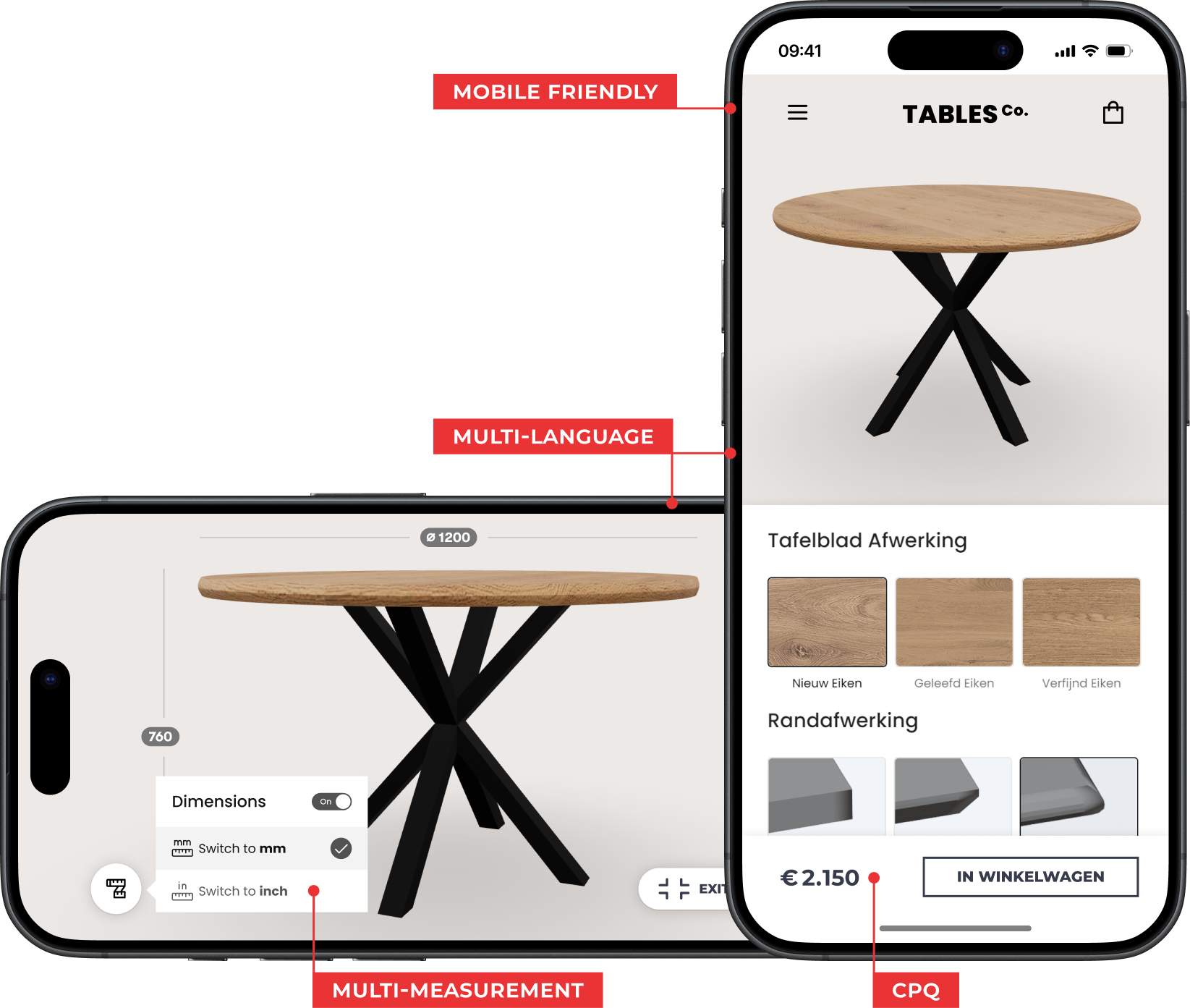
A 3D visualizer also helps buyers understand how specific choices affect the product. When they switch an option, the 3D model updates to reflect that version, which removes the guesswork that usually comes with custom items. Buyers no longer have to imagine the difference between dimensions or materials. They can see it directly, which leads to a smoother purchase experience.
What Are the Benefits of 3D Visualization for Your Buyers?
Most buyers don’t drop off because they dislike your products. They drop off because evaluating a custom product takes too long. Static photos require them to click through multiple images, compare mental notes, and re-check specs just to understand basic differences. A 3D visualizer removes that effort by giving buyers accurate visual context from the first interaction.
Clear, Realistic Understanding of the Product: A 42 inch cabinet and a 48 inch cabinet look almost identical in static photos. In a 3D visualizer, the difference is immediate. Buyers see proportions, spacing, and scale as they would in real life. Instead of imagining how a material, finish, or structural change affects the overall look, they see the result instantly.
A More Natural Way to Explore Custom Options: A 3D model behaves like a real object. Buyers rotate it, zoom in, look underneath, and examine details from every angle. This mirrors how people evaluate products in person, which makes the experience intuitive. For example, 360° product views can boost conversion rates by up to 40%.
Easier Interpretation of Complex Configurations: Custom products are difficult to explain with text or static images. Layout changes, material variations, module additions, or dimensional adjustments can be confusing when described in a list of options. According to 3D Imaging Market Research, 82% of product page visitors activate the 3D view. A 3D visualization software translates these choices into immediate visual feedback.
A Smoother, More Enjoyable Buying Experience: Buyers progress through the journey with less friction and can share the visualization with others when needed. The experience feels modern, easy, and tailored to the way people make decisions.
What Are the Benefits of 3D Visualization for Your Teams?
Most internal bottlenecks in selling custom products start with the same issue: buyers cannot visualize what they are choosing. A 3D visualizer solves that problem before it reaches sales or engineering. When customers understand the product without extra explanation, your teams spend less time correcting misunderstandings and more time on qualified opportunities.
Faster and More Productive Sales Conversations: Sales teams spend a significant amount of time explaining differences that static images cannot show. A 3D visualizer solves this before the first call. Buyers arrive already understanding dimensions, materials, and structure because they explored the product on their own. Sales no longer needs long calls or email chains just to clarify what a customer wants.
Higher Engagement and Better Lead Quality: Buyers who interact with a 3D visualization software tend to spend more time with the product and develop a clearer idea of what they want. This creates more qualified leads downstream. Instead of vague inquiries, sales receives buyers who already understand their configuration and have confirmed visually that it fits their needs.
Fewer Misunderstandings and Pre-Sales Errors: Many misunderstandings begin with a customer misunderstanding the product or wanting something incompatible. A 3D visualizer reduces this risk early by showing exactly what is being selected in real time, and applying product rules. Which means buyers select only options that are manufacturable.
Consistent Visuals Across All Channels: When products change frequently or have multiple variations, keeping visuals aligned across marketing, sales, dealers, and distributors is difficult. A 3D visualizer solves this by acting as the single source of truth. Every team references the same accurate model instead of inconsistent photos.
Better Product Literacy for Internal Teams: Complex products often require months of hands-on training to really understand. A 3D visualizer shortens that learning curve. New team members can explore components, materials, and configurations visually, which makes internal onboarding faster and more intuitive.
Get Started: Choose the Right 3D Visualizer
Understanding the benefits of 3D visualization is one thing. Choosing a 3D visualizer that actually improves your sales process and buying experience is another. The first step is making sure your product data is organized. Dimensions, materials, components, finishes, technical drawings, and any existing CAD assets should be documented and structured clearly.
Many businesses already have this information, but it often lives across spreadsheets, internal folders, and the knowledge of senior staff. Bringing it together forms the foundation for a reliable and accurate 3D visualization software.
Once your product information is consolidated, the next decision is selecting a 3D visualizer that fits your products and your buyers. A simple product line may only require a high-quality 3D viewer that lets customers rotate and zoom. More complex products often need interactive elements that reflect dimension changes or modular layouts in real time.
Businesses with large catalogs need a visualizer that can handle dozens or hundreds of SKUs without performance issues. Global companies may require localization. Teams with detailed workflows may need assets exported for marketing, dealers, or documentation.
The right 3D visualizer is the one that aligns with your product complexity, your selling process, and the expectations of your buyers.
Build the Right 3D Visualizer with Salsita
At Salsita, every project starts with discovery. We work closely with your team to understand your products, how they’re sold, and what your customers need to see in order to make confident decisions. This allows us to define the scope accurately and design a 3D visualizer around your real requirements rather than forcing your products into a template.
From there, we outline the visual flows, performance needs, and technical requirements. We create an early version of the visualization software so you can see how your products will appear and behave online. This step helps validate assumptions early and gives you space to adjust before full development begins.
By combining strong 3D modeling, realistic visualization, and modern web engineering, we deliver 3D visualizers that integrate smoothly into your website or sales process. Products look accurate. Buyers understand them faster. And your team works with a single source of truth across sales, marketing, and operations.
Whether you manufacture cabinets, modular furniture, pergolas, railings, doors, or other customizable products, we help you present your them in a way that reduces friction and builds confidence.