
We Analyzed 120 Storage and Cabinet Websites. 73% Are Doing It Wrong (& How to Fix it)
Only 5% of storage and cabinet websites offer 3D configurators, while 73% create unnecessary friction through poor customization tools, hidden pricing, or sales-only purchase paths. Here's what the data reveals and how to fix it.

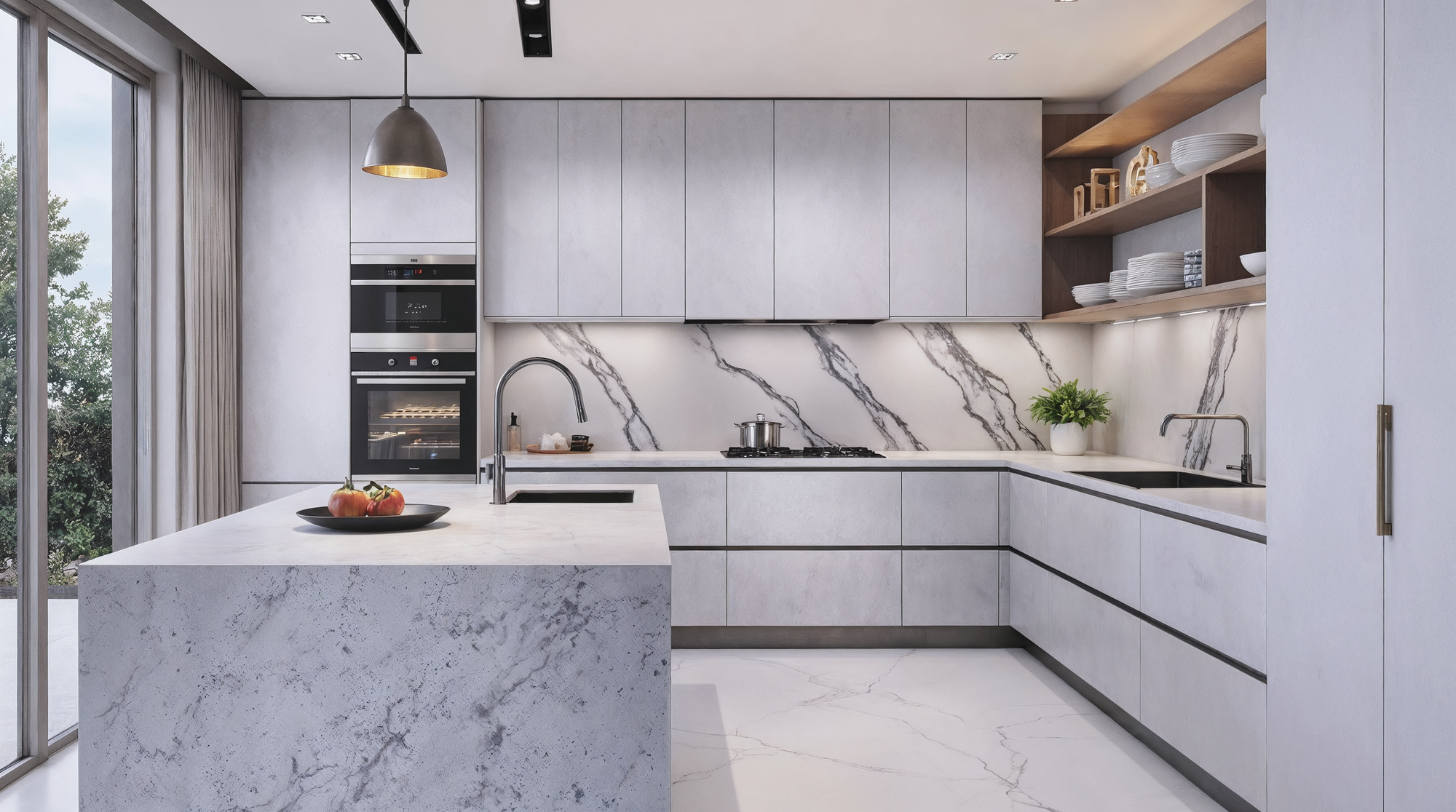
In the storage and cabinet market, customization is the main selling point. It's what makes the product relevant to the buyer's space, needs, and budget. Yet that same customization is still poorly supported online.
That gap shows up clearly in the data.
Across the 120 storage and cabinet websites we analyzed, only 5% offer a 3D configurator. Most still rely on image galleries, PDFs, or simple dropdowns. So while many brands position their products as customizable, their websites do very little to help buyers actually work through those choices online.
In this study, we break down where cabinet websites fall short, what the data reveals about the current state of the market, and what you can do to create a better online experience.
Key Findings at a Glance:
| Finding | Result | What It Means |
|---|---|---|
| Websites with a 3D configurator | 5% | Most buyers still have to imagine the final product instead of configuring it. |
| Websites with no visible pricing | 63% | Buyers have no idea whether the product fits their budget. |
| Websites with a sales-assisted journey | 72% | Most websites still push buyers into quote requests, consultations, or dealer contact. |
How We Conducted this Study
We reviewed 120 storage and cabinetry websites to understand how websites in this space support online customization.
The sample includes businesses from:
- Europe (43%)
- North America (38%)
- Australia and New Zealand (19%)
We focused on websites selling kitchen cabinetry, vanities, wardrobes, closets, shelving systems, and other built-in or modular storage products.
Some specialized in one category. Others sold storage products for multiple spaces, which we grouped under Multipurpose Cabinets.
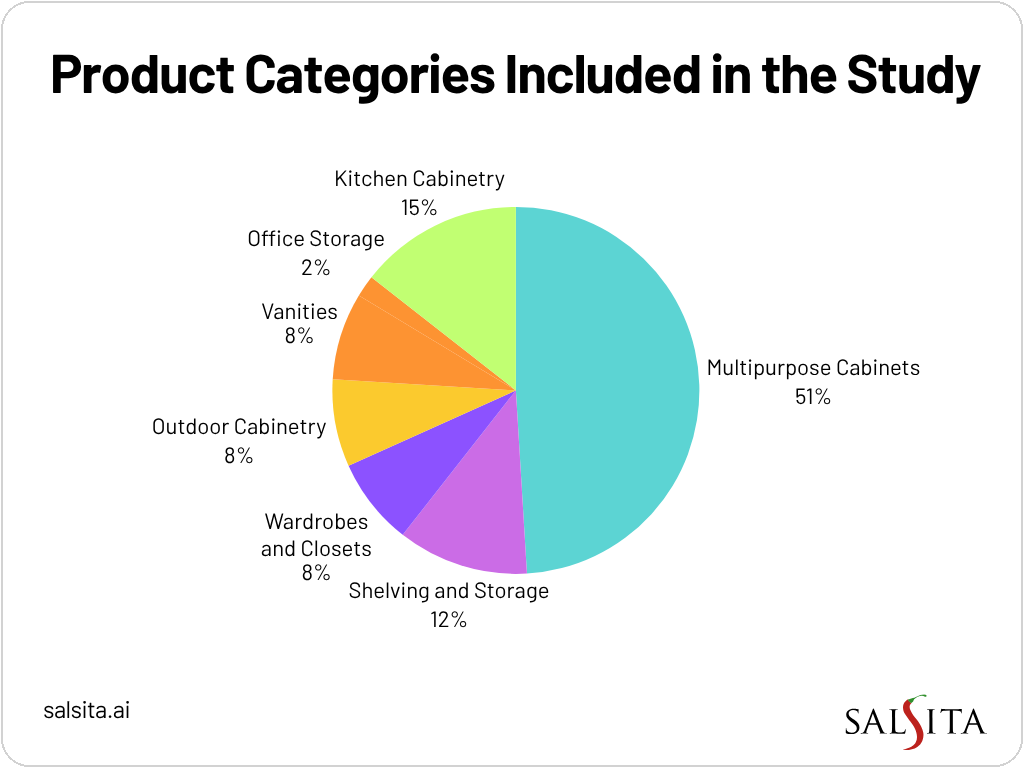
To avoid looking only at large brands, we included websites across different traffic ranges, from smaller niche websites to brands with more than 50K monthly visits.
For each website, we evaluated the same set of criteria:
- Customization type: image gallery, PDF download, dropdown menu, filters, basic configurator, or 3D configurator
- Price visibility: visible, partially visible, or not shown
Buying journey: direct purchase or a sales-assisted journey through a quote form, consultation, email, showroom visit, or dealer contact.
Finding 1: The Customization Gap Is Wider Than You Think
Here's the number that stands out most from our research: Only 5% of websites offer a 3D configurator.
In an industry where buyers need to assess dimensions, finishes, layouts, and room fit, interactive tools that help visualize these choices are still surprisingly rare.
So what are most websites using instead?
- 27% rely on image galleries: showcasing finished projects
- 27% offer no customization: relying on product pages and contact forms
- 16% use dropdown menus: presets with size and finish options
- 14% offer a basic configurator: providing some interactive customization
- 8% use PDF downloads: sharing detailed catalogs and specification sheets
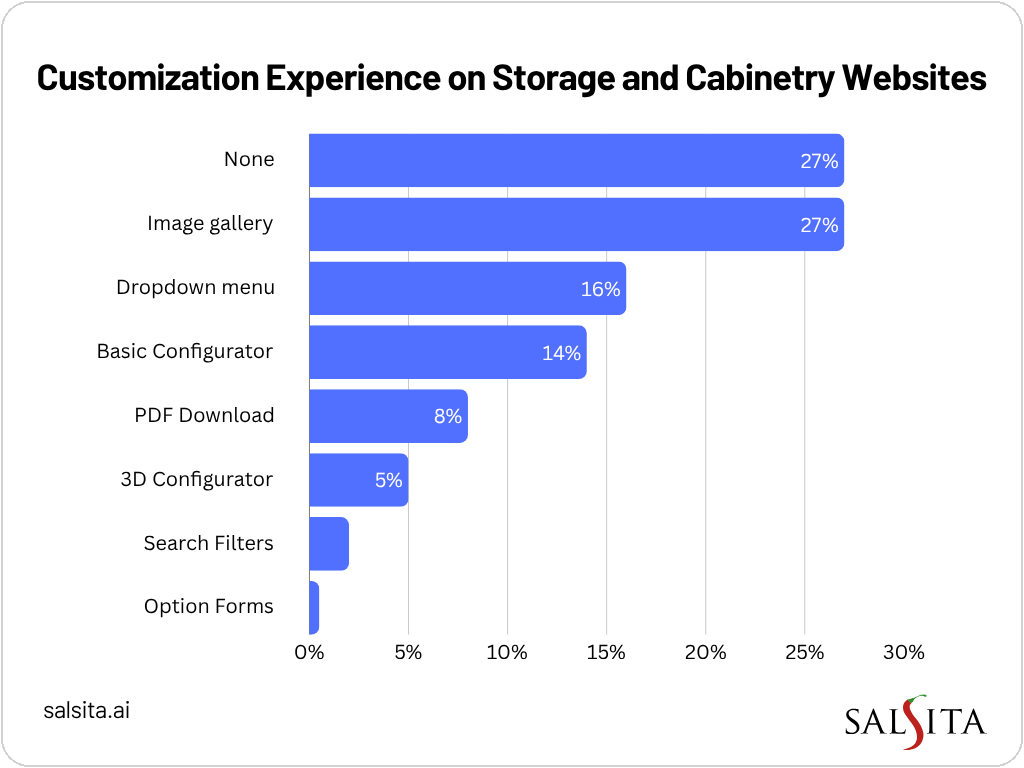
Each approach has its purpose. Galleries inspire. PDFs inform in detail. Dropdowns handle simple selections efficiently. But none of these actually guide a buyer through configuration. And none of them answer the question buyers are actually asking: "What will this look like in my space, with my choices?"
That's because storage and cabinet buyers aren't just shopping. They're problem-solving. They need to understand how dimensions work in their space. They need to see how different finishes look together.
When we group these experiences into broader categories, the pattern becomes even clearer:
- 62% fall into Static Discovery: galleries, PDFs, or no real customization interface
- 18% fall into Selection-Based Discovery: menus and filters that help you narrow options but don't show you the outcome
- Only 19% offer Interactive Configuration: either basic or 3D configurators
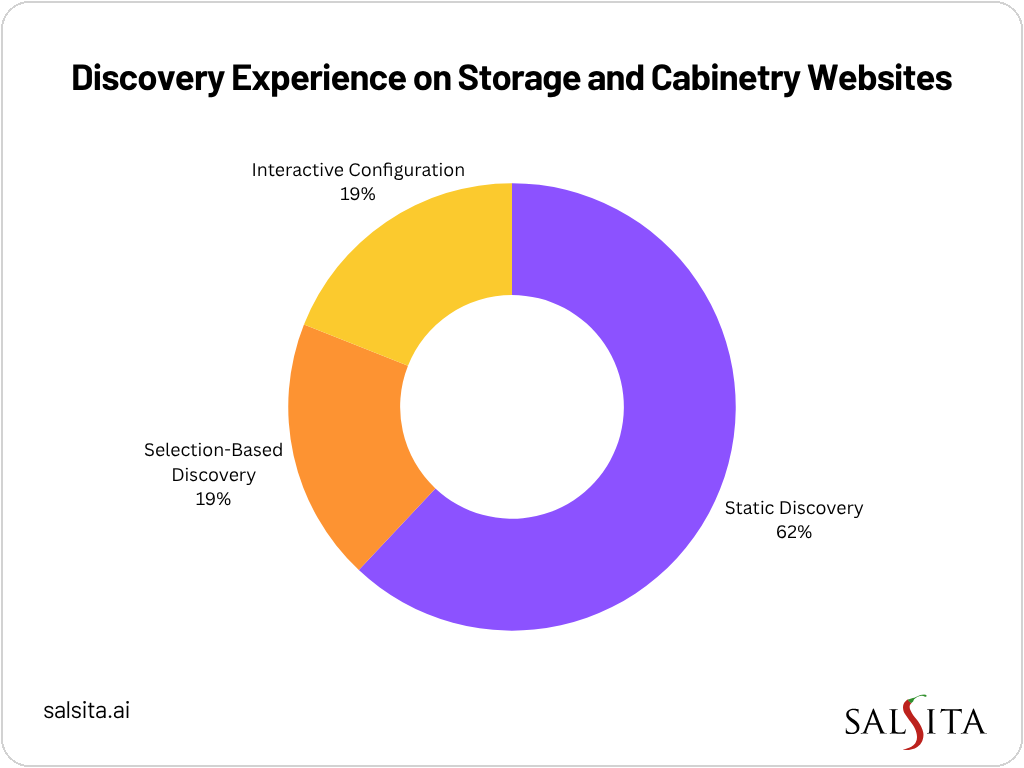
If your website falls into Static Discovery or Selection-Based Discovery, the buyer is still doing too much of the configuration work mentally. They have to picture how modules fit together, how finishes will look once combined, and whether the final setup will actually make sense for their room.
This might explain some common challenges you are facing: early drop-offs, incomplete contact forms, or prospects who reach out without a clear sense of what they want.
The Fix: You don't necessarily need to jump straight to a 3D furniture configurator (though if you can, you should). But you do need to move beyond static galleries and basic dropdowns. Even a well-designed 2D configurator that shows how modules connect, how finishes combine, and what the layout looks like as buyers make choices will improve the experience.
Finding 2: The Pricing Visibility Challenge
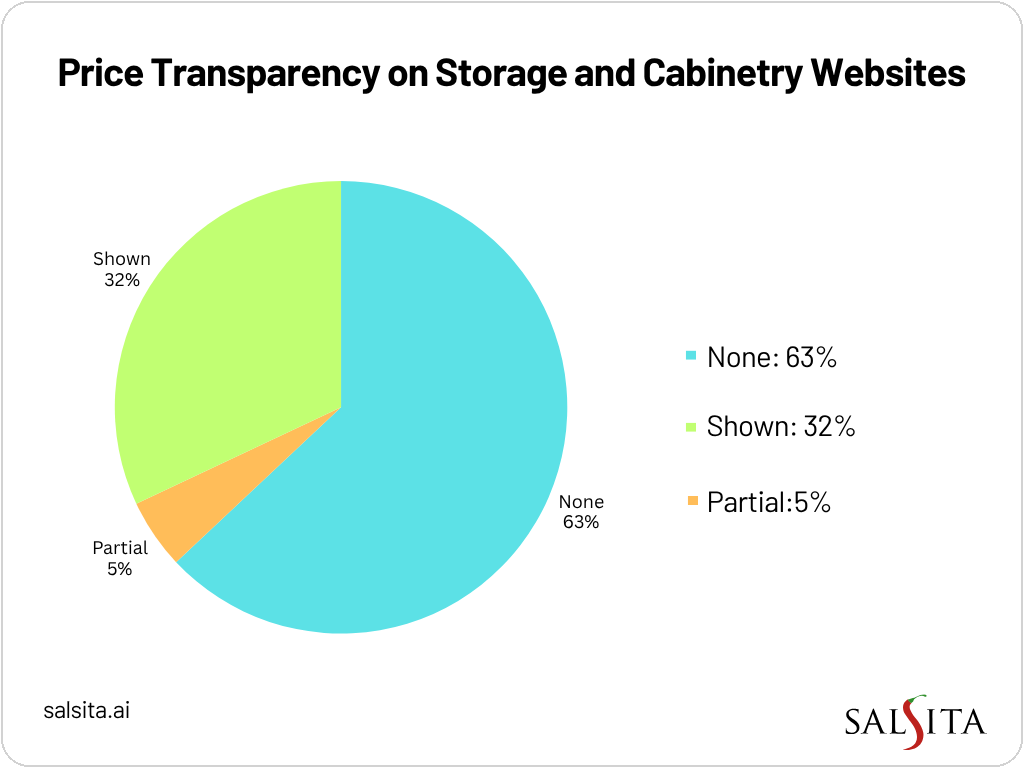
Here's another pattern that emerged: 63% of the websites we analyzed show no pricing at all. Not a ballpark figure. Not a starting price. Not even a range. Only 32% show pricing clearly, and another 5% show it partially.
We understand why this happens. Storage and cabinet projects are genuinely complex. Every configuration is different. Materials vary. Installation costs fluctuate. Regional factors matter. True custom work is hard to price with precision online.
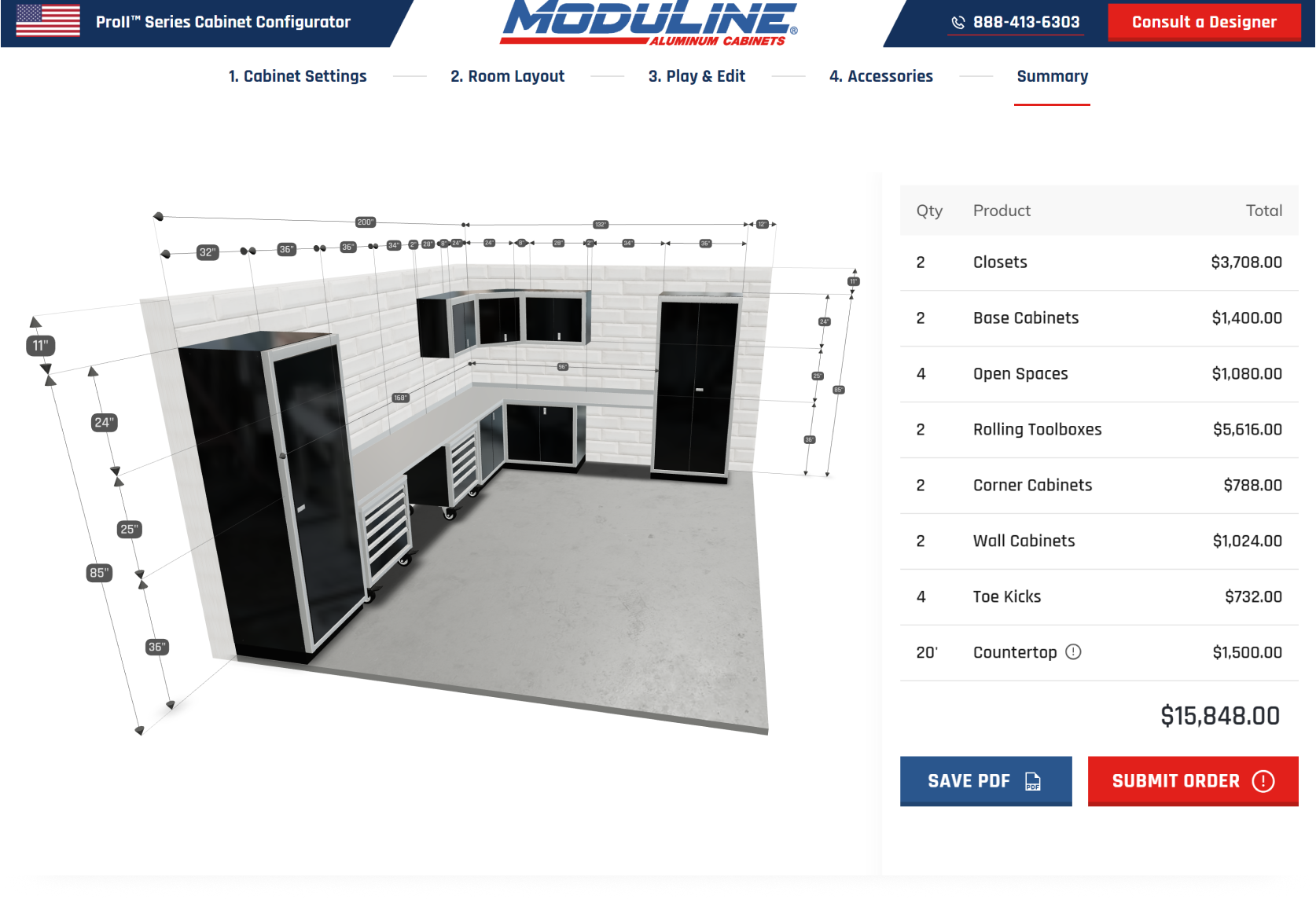
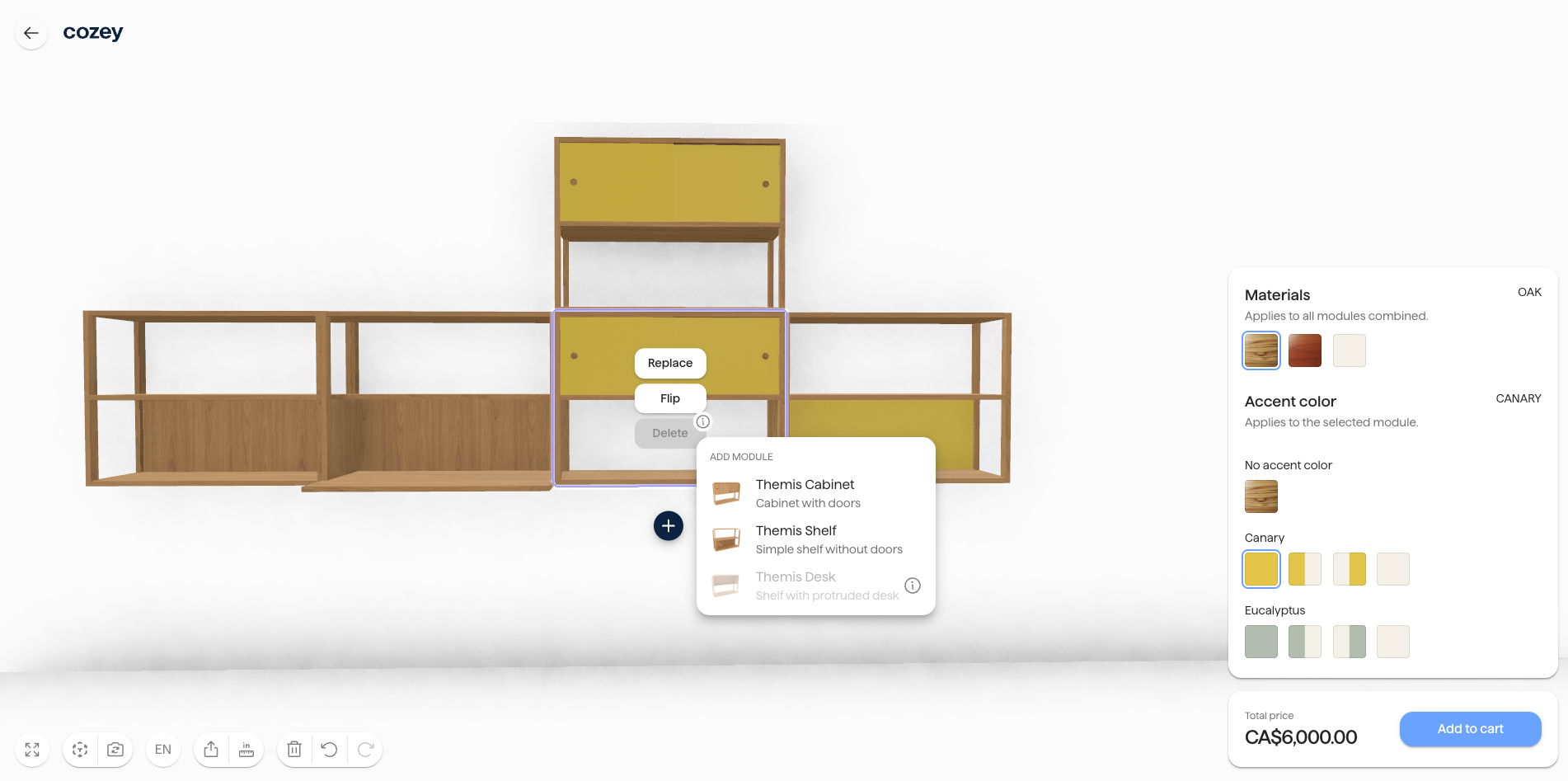
But here's what we observed: buyers aren't necessarily expecting perfect quotes from a website (although that's achievable with visual CPQ). They're at least looking for decision-making context. They want to know if they're looking at a $3,000 project or a $30,000 project. They want to understand if upgrading to that premium finish adds $200 or $2,000. They want some signal that helps them gauge fit with their budget early on.
Example of Visual CPQ Used in a 3D Furniture Configurator
Without any pricing context, buyers are being asked to invest time and energy into exploring a product without knowing if it's even in their budget. That's a challenging position for both the buyer and the brand.
The pricing gap is especially visible on websites with weaker customization experiences:
- 91% of PDF-based websites show no visible pricing
- 88% of gallery-based websites don't display pricing
- 81% of websites with no customization interface also lack pricing
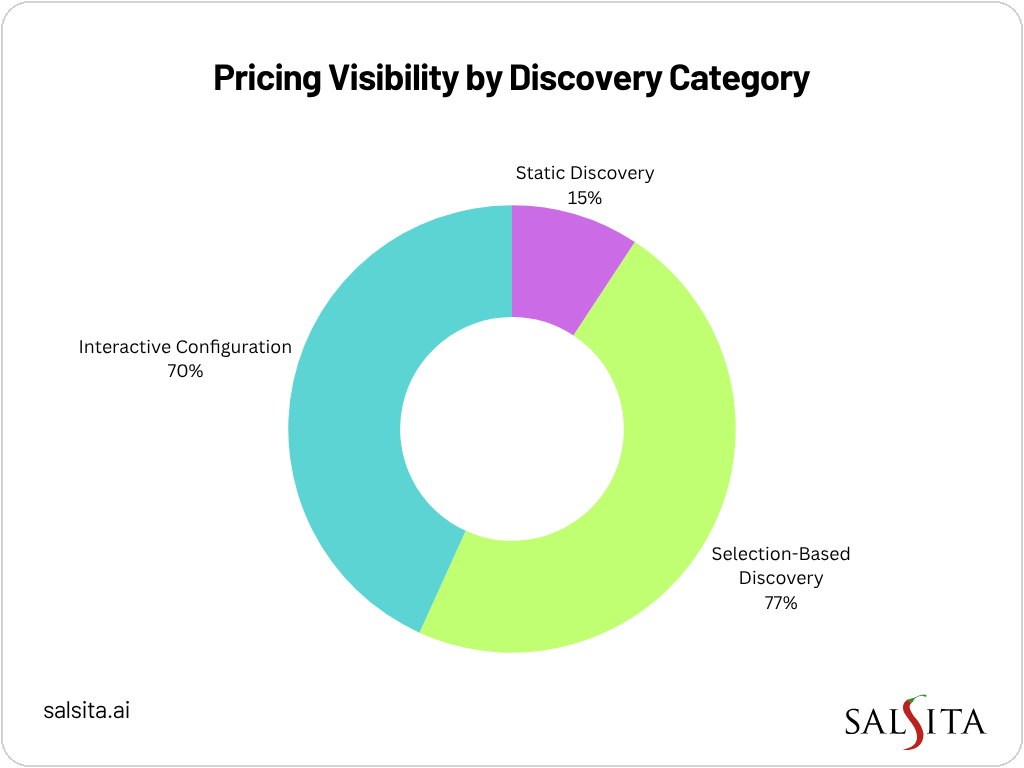
This creates a twofold challenge: buyers can't easily work through the product configuration and can't gauge the cost. It's a combination that makes decision-making almost impossible.
The fix: Start somewhere. A "starting at" price is better than none. Example configurations with estimated costs give buyers a reference point. A simple price estimator that factors in size, finish, and major options can be surprisingly effective. And if you implement a 3D furniture configurator, pricing can become part of the experience instead of a separate unknown.
Finding 3: Most Websites Push Buyers Into a Sales-Assisted Journey
Here's where the data reveals a significant pattern: even when a buyer has explored your product catalog, understands their needs, and is ready to move forward, most websites don't offer a direct purchase option.
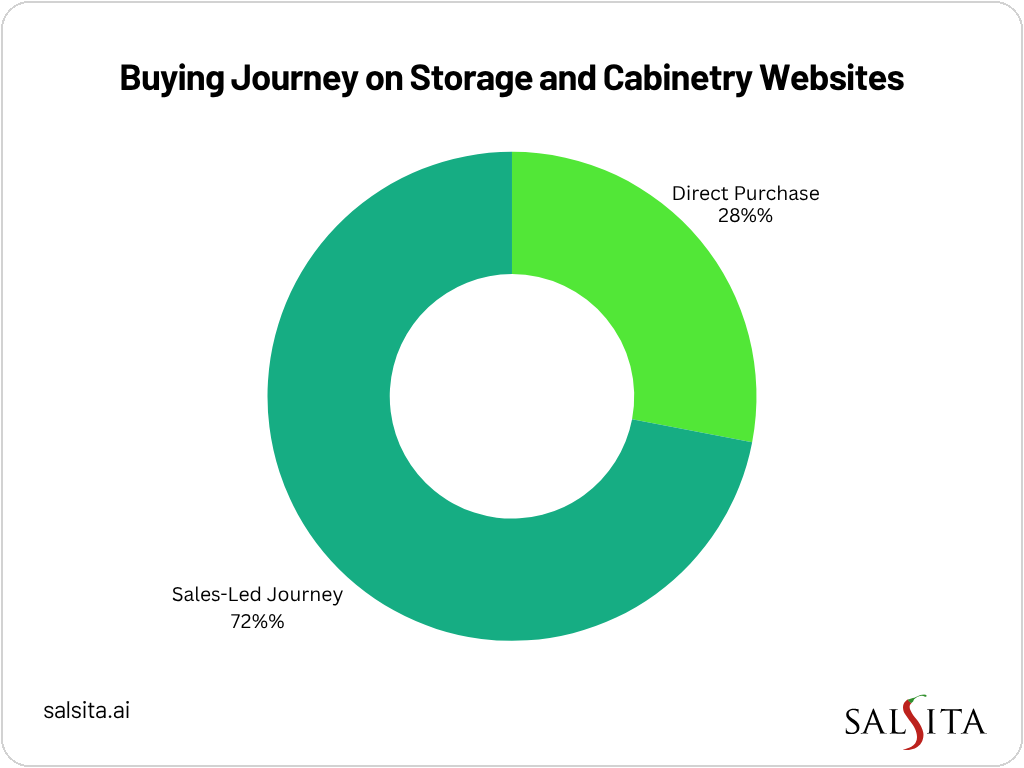
Only 28% of websites offer an Add to Cart option. The rest move buyers into manual follow-ups:
- 29% send buyers to a quote form
- 15% push them to email contact
- 14% ask for an online consultation
- 8% require a showroom visit
- 5% rely on a dealer search
- 2% ask buyers to call
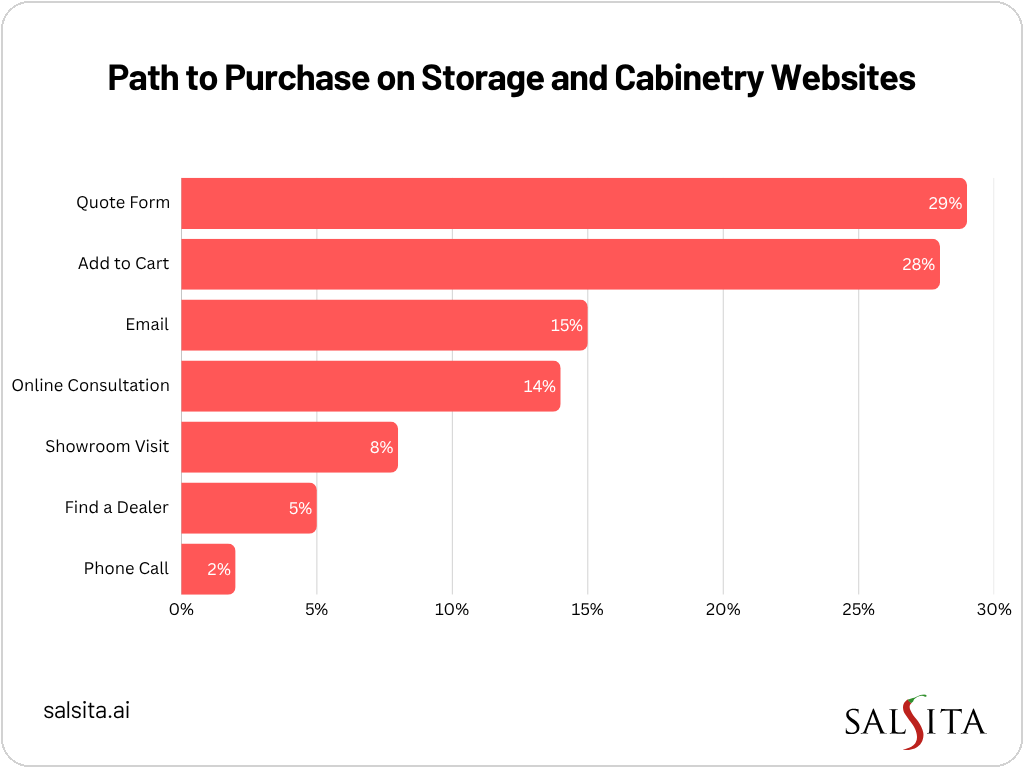
When we step back and look at the broader pattern, it's striking: 72% of websites push buyers into a sales-led journey, while only 28% support direct purchase.
Think about what this means from the buyer's perspective. They're comparing multiple cabinet brands, evaluating different options, working within a specific budget, and trying to make a decision. Now they have to wait days for a sales callback just to get basic information they could have accessed immediately on the website. Many won't wait. They'll move on to a competitor who makes it easier to get answers.
Now, let's be clear: not all sales-assisted journeys are wrong. For full kitchen renovations, working with a designer or sales specialist is essential. These are exactly the types of projects where professional expertise adds genuine value.
But here's what the data shows: many websites guide every buyer down the same path, regardless of project complexity.
A homeowner buying a pre-configured pantry shelving system gets the same "request a consultation" flow as a contractor planning a multi-unit development with full kitchen packages. A buyer who has spent 30 minutes customizing their closet layout with specific dimensions, still has to submit a quote request and wait for a callback.
This creates unnecessary friction at critical conversion points.
The fix: Create multiple paths. For simpler products with clear rules, offer direct purchase. For more complex projects, guide buyers toward consultation. And between those two, use a 3D configurator with CPQ to do more of the work online. Let buyers shape the product, see how key choices affect price, and get closer to a realistic solution before sales steps in.
Want the same for your products? Reach out to us.
Finding 4: When You Add It All Up, 73% of Websites Are Doing It Wrong
Here's the number that brings it all together: 73% of websites have at least one major barrier in their buying journey. Out of 120 websites analyzed, 88 had at least one of these friction points:
- Static Discovery: Relies on galleries, PDFs, or no real customization interface
- No Visible Pricing: Shows no pricing guidance whatsoever
- Sales-Assisted Journey Only: no direct purchase path for any product
What's more revealing is how often these issues overlap. In our data, 68% of websites show at least two of these friction points at the same time, and 53% show all three. In other words, many buyers land on a website with static discovery, no visible pricing, and no direct purchase path. At that point, the website is not helping the sale move forward. It's an online catalog creating friction at every step.
Interestingly, 27% of websites that avoid all three friction points are not concentrated in one type of business. They appear across traffic ranges, from smaller niche sites to larger brands. That suggests this is not only a budget issue. In many cases, it's about prioritizing the right elements of the digital experience.
The Fix: These friction points are connected. Buyers who can't properly configure the product usually can't judge the price well either, and that makes the next step feel heavier. That's why the 5% of websites with a 3D configurator are in such a strong position. A 3D configurator helps buyers customize the product, see how their choices affect cost, and build enough confidence to either buy directly or reach out with much clearer intent. You don't need to launch this across every product line at once. Start with the categories where friction is highest.
Does Your Website Create the Same Friction? Here’s How to Fix It
If you sell storage or cabinet products online, these findings might feel familiar. The main takeaway is not just that many websites still fall short. It is that the opportunity to outperform is still wide open.
Only 5% of the websites in this study offer a 3D configurator. That means most of your competitors are still relying on galleries, PDFs, hidden pricing, and sales-led next steps. So if your website makes customization easier to work through, you are not making a small improvement. You are moving ahead in an area where the market is still weak.
A 3D configurator helps solve the exact challenges this study uncovered:
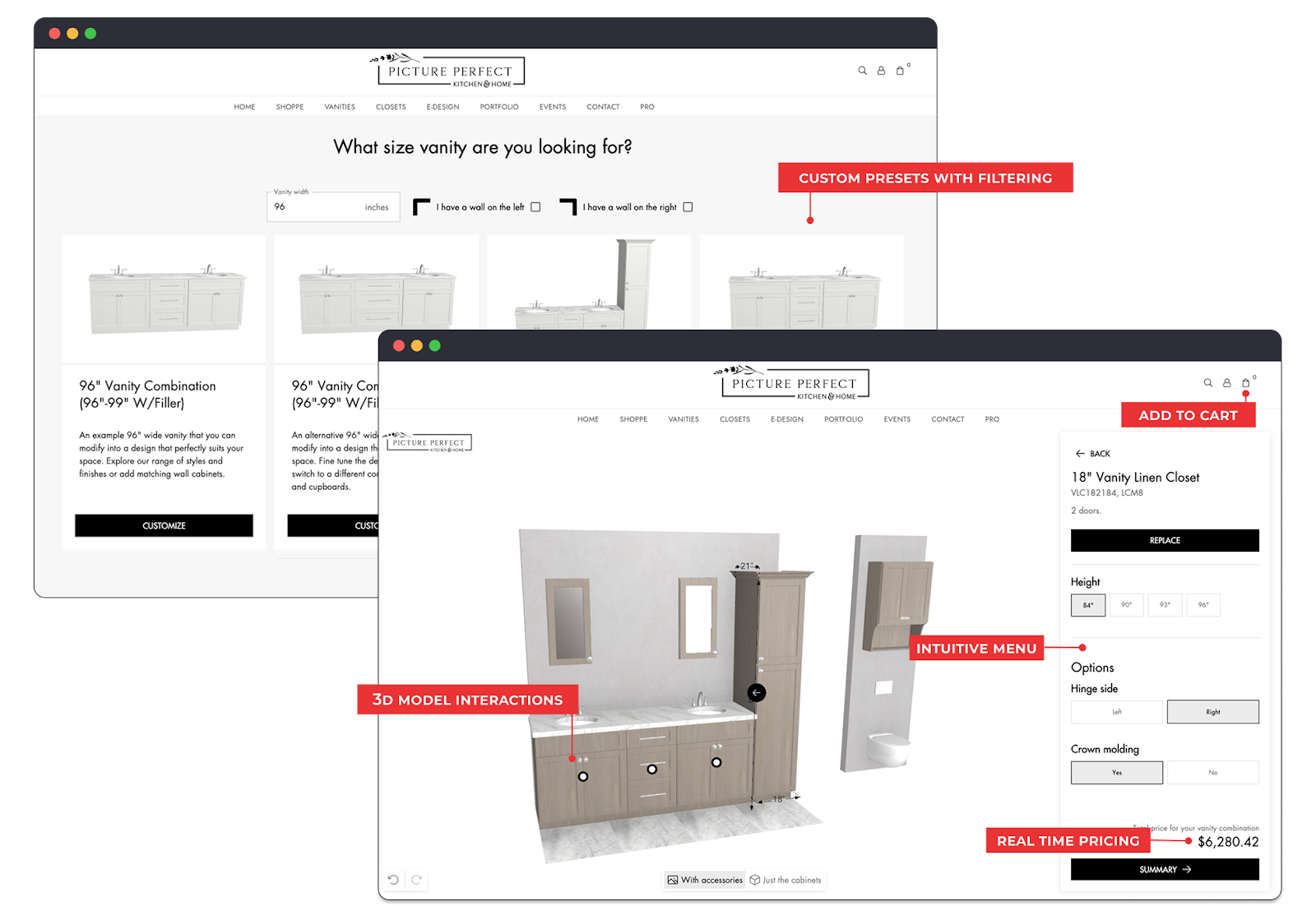
- High-fidelity 3D visualization that updates the product as buyers change sizes, finishes, layouts, and modules
- Visual CPQ that shows how each choice affects cost
- Rule-based configuration keeps buyers inside valid product rules, without manual checks from sales or engineering
- Ecommerce integration makes direct purchase possible for simpler configurations
That changes the role of the website. Instead of acting mainly as a gallery or lead form, it starts helping buyers make real progress. For you, that also means less early drop-off, better-qualified leads, and less back-and-forth with buyers.
That is exactly what we help brands build at Salsita. Our 3D furniture configurator helps cabinet and storage companies turn complex products into a buying experience that actually works online. Our platform is built for configurable products with real product logic, pricing rules, and more demanding sales workflows.
Want to see how a 3D configurator could work for your products? Reach out to us here:
FAQ: Storage and Cabinet Website UX
What percentage of storage and cabinet websites use a 3D configurator?
Only 5% of the 120 websites in our study offered a 3D configurator. Most still relied on image galleries, PDFs, dropdown menus, or no meaningful customization interface at all.
Why do so many storage and cabinet websites create friction for buyers?
The biggest reasons are poor customization support, hidden pricing, and sales-heavy next steps. In our study, 63% of websites showed no pricing, 72% pushed buyers into a sales-assisted journey, and 73% had at least one major friction point in the buying process.
What is the most common customization experience on storage and cabinet websites?
The most common experiences are still static ones. 27% of websites relied mainly on image galleries, and another 27% offered no structured customization interface at all.
Why does pricing matter so much on cabinet websites?
Pricing helps buyers decide whether a product is worth exploring further. Without even a starting price or a range, buyers cannot tell whether the product fits their project budget. That uncertainty often leads to drop-off.
Do all cabinet brands need a 3D configurator?
Not every brand needs to launch a full 3D configurator across the entire catalog at once. But brands selling configurable products do need a better way to help buyers work through options online. For many companies, a 3D configurator is the clearest way to improve customization, pricing visibility, and buyer confidence at the same time.
How does a 3D configurator improve the buying journey?
A 3D configurator helps buyers see the product as they configure it, understand how choices affect price, stay within valid product rules, and move closer to purchase with more confidence. Instead of guessing, they can work through the product in a structured way.
What should cabinet brands improve first?
Start where friction is highest. For most brands, that means improving one or more of these areas:
- how buyers work through customization
- how pricing is shown
- how buyers move forward after narrowing their options