
Case Study: How KILO Connects Online Furniture Configuration to CNC Production
See how KILO turned online furniture configuration into a direct path to CNC production. If you sell custom furniture, this case study shows how to reduce manual drafting and scale made-to-measure orders online.

Custom furniture often starts with a simple idea: letting customers adjust dimensions to fit their unique space. But in practice, even a small change affects the entire production process.
Change the height of a shelf and the design file used for production must change as well. For companies working with CNC machines, every variation requires updated drawings before anything can be cut.
This is the challenge that KILO, a Dutch designer furniture brand, brought to Salsita.
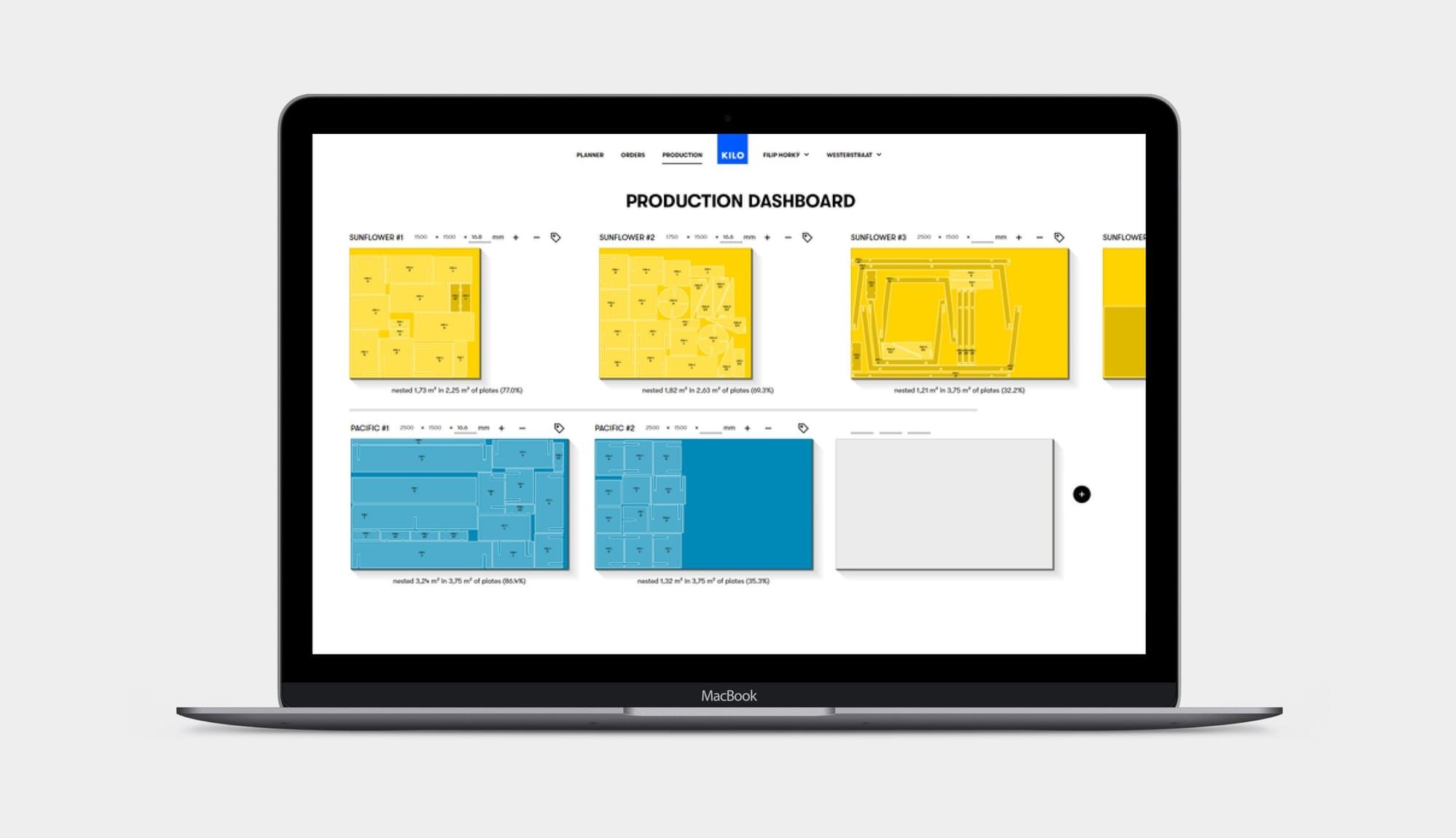
As KILO’s orders increased, the work behind those CNC production files started to pile up. Every piece required its own updated design before the machine could cut it, and preparing those files manually quickly became difficult to keep up with.
When Jan Paul Koning, co-founder and head of design at KILO, approached Salsita, he asked for something simple: “Make my life easier.”
The Challenge: Custom Furniture Couldn’t Scale Online
KILO designs minimalist furniture from laminated birch plywood. The team produces each piece with high-precision CNC machines. Because the parts are cut so precisely, customers can assemble the furniture without screws, glue, or additional hardware.
This production method gives KILO a lot of flexibility. The team can produce many products in different dimensions just by changing the design file sent to the CNC machine.
But that flexibility came with a downside.
Every custom order required someone to update the production design by hand before anything could be made. As orders grew, so did the drafting work.
This also affected sales. Customers had to visit KILO’s retail stores in Amsterdam or Antwerp to order made-to-measure furniture. The online shop could only sell pre-designed products. That became a serious limit. Online sales were growing fast, but KILO could not offer its custom products there.
As Salsita’s founder Matthew Gertner put it, KILO had become “a victim of their own success.”
“In talking to Jan Paul, it was clear he was overwhelmed with drawing and drafting work. He and his partner Peter were sure that they were leaving significant revenue on the table by not offering customized furniture online.”
The Goal: Connect Online Configuration to Manufacturing
KILO did not just need a better online shopping experience. The real goal was to connect online customization directly to its CNC manufacturing process.
The company wanted customers to configure furniture online with precise dimensions, while making sure those choices could be turned into digital designs for the CNC machines.
In short, KILO needed a furniture configurator that could:
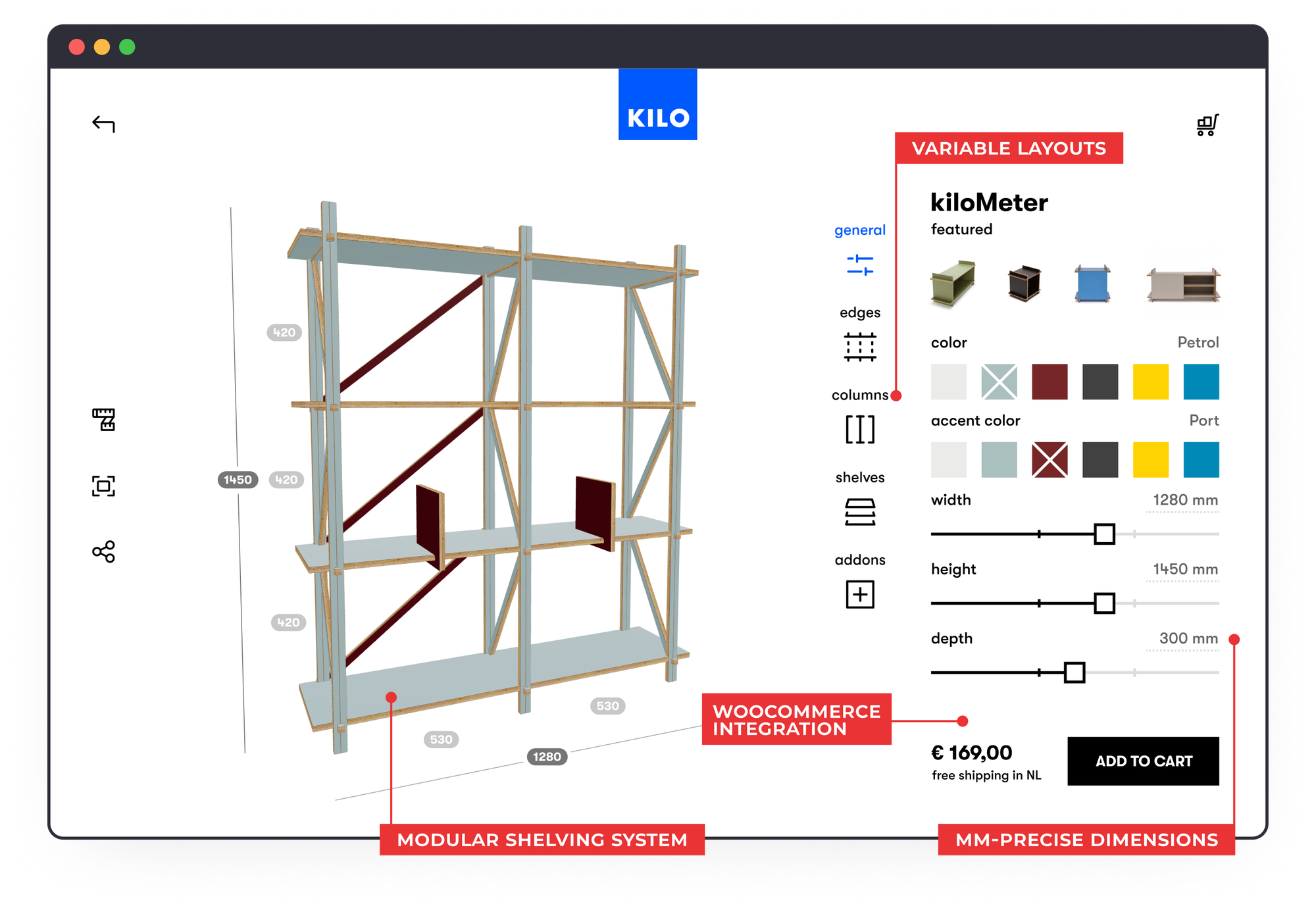
- Support millimeter-precise customization
- Turn customer inputs into CNC-ready design data
- Cut manual work on production drawings
- Make custom online sales easier to scale

The Solution: A Furniture Configurator Built for CNC Production
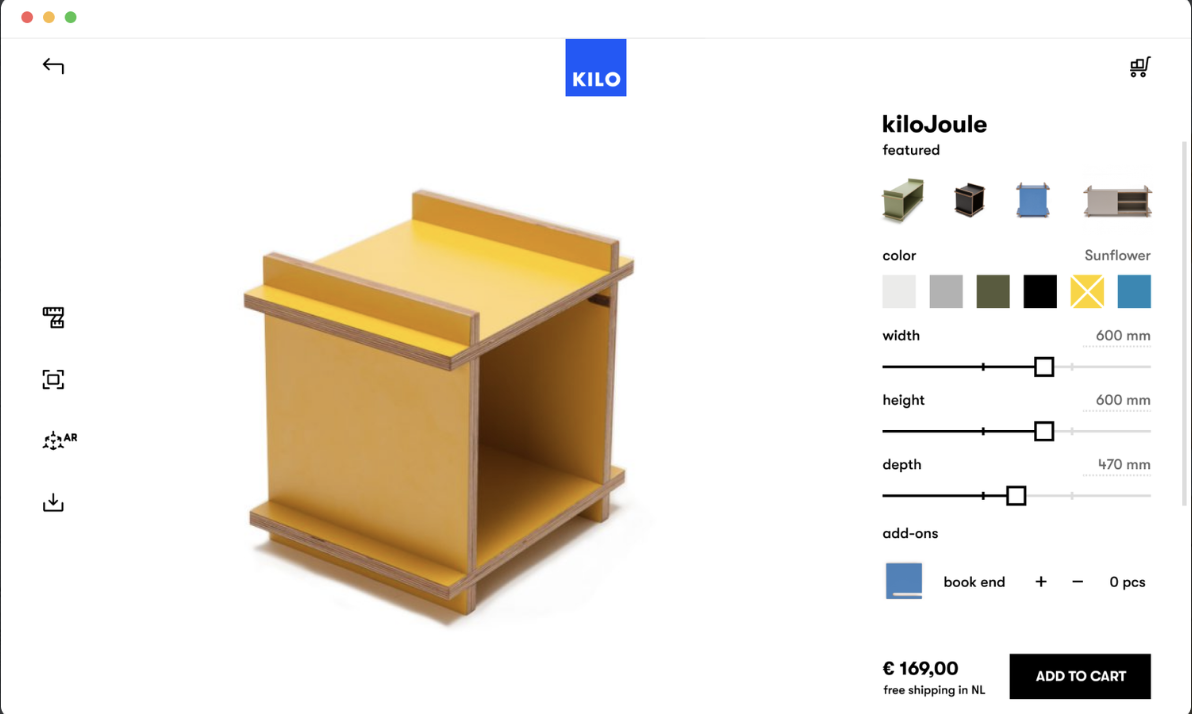
Salsita implemented a 3D furniture configurator that connects online customization directly to KILO’s CNC manufacturing process.
At the core of the configurator are parametric models. Instead of defining furniture with fixed dimensions, the design is described by rules.
When a customer adjusts the size of a product, the configurator automatically recalculates all the parts that must be produced. Panels resize, joints remain aligned, and the product stays structurally correct.
Jiří Stanisevsky, CTO at Salsita and part of the team that implemented KILO’s configurator, explains:
“Finding the right way to model the furniture was the biggest challenge. It's pretty rare to find a configurator with this level of versatility, and parametric models like Grasshopper are far too complex and difficult to create. In the end, we came up with a simple domain-specific language in JavaScript that makes it easy to design the models while providing all the flexibility we needed.”
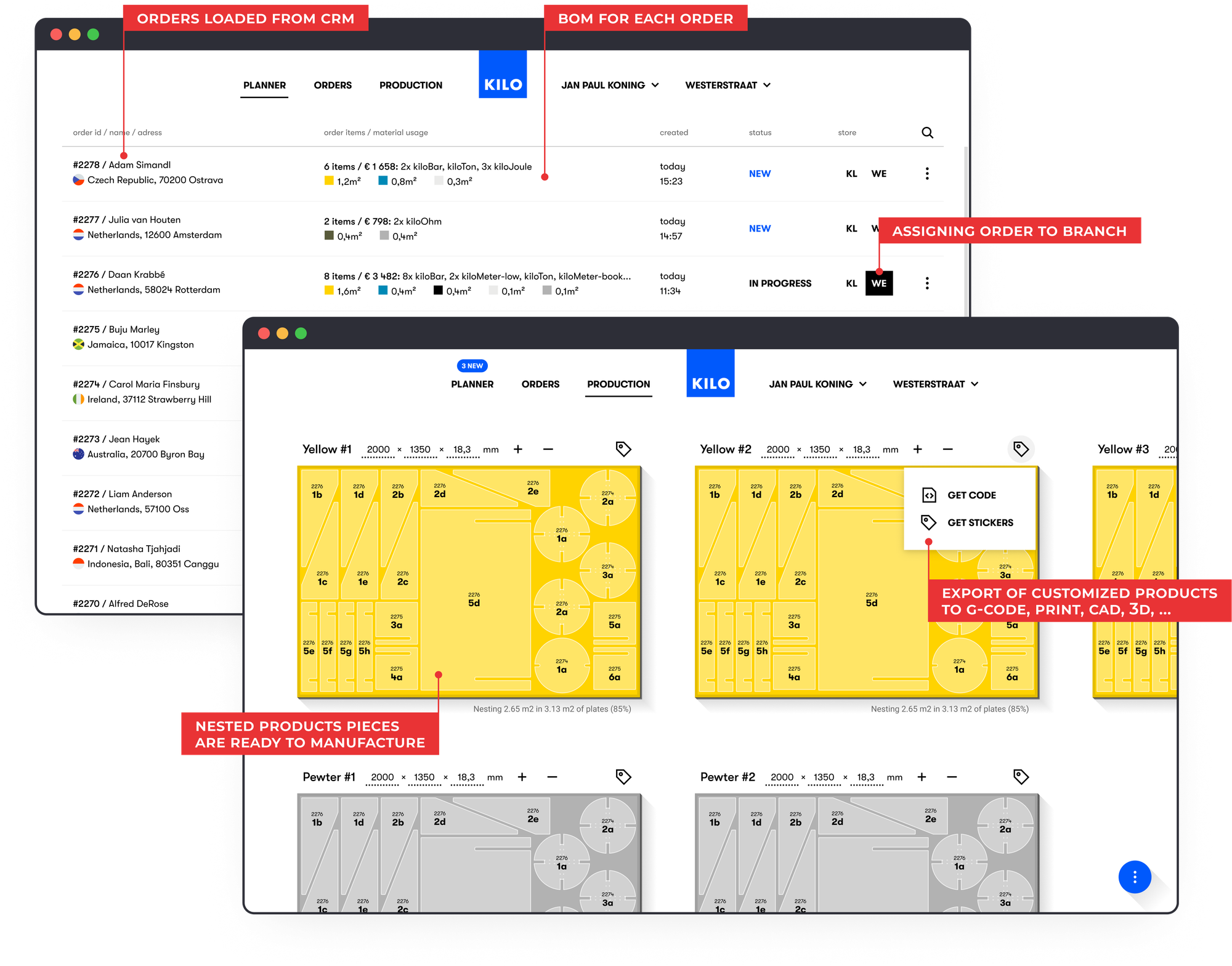
Once a design is submitted, the configurator automatically generates the production data needed for CNC manufacturing. This includes:
- Technical drawings reflecting the exact dimensions of the configured furniture
- Cutting layouts showing how each panel should be placed on laminated plywood boards
- CNC machining files used by the machine to cut every component
Orders appear in KILO’s order dashboard, where the production team can review them before sending the files to the CNC machines.
How Configuration Connects to CNC Manufacturing:
| Step | What Happens |
|---|---|
| Customer configuration | A buyer adjusts the dimensions of a piece of furniture online |
| Model recalculation | The parametric models update panels, joints, and structure automatically |
| Production data generation | Drawings, cutting layouts, and CNC machining files are created automatically |
| Production review | Orders appear in KILO’s dashboard for validation |
| CNC manufacturing | The prepared files are sent directly to the CNC machines |
The Results: A Business Built Around the Configurator
The configurator quickly became central to how KILO sells its furniture. Instead of relying on manual design preparation and in-store consultations, customers can now configure products directly online and submit orders in a single flow.
This shift brought measurable ROI for the company:
- 2–3× Faster Sales Cycles: Buyers configure and purchase shelving systems directly through the configurator. There is no need for quoting, approval, or back and forth with sales.
- 40% Lower Operational Costs: Automated production outputs replaced manual file preparation, removing hours of backend work for each order.
- Scaled Online Orders: KILO can process a higher volume of made-to-measure furniture orders without expanding the team or increasing operational complexity.
- Improved Product Visualization: Customers can better understand dimensions and proportions before ordering, reducing uncertainty around made-to-measure furniture.
Today, the configurator sits at the center of KILO’s business. It allows the company to offer customizable furniture online while keeping production efficient and manageable.
What Furniture Manufacturers Can Learn from KILO’s Success Story
KILO’s experience highlights a few practical lessons for manufacturers selling furniture in multiple sizes or offering made-to-measure products.
When customers can change dimensions, the real challenge is making sure those variations can move smoothly from order to production.
Three principles from KILO’s implementation stand out:
1. Treat configuration as part of manufacturing, not just sales
If customization happens upstream in the sales process but production files are prepared manually later, the workflow will eventually break down. Configuration needs to generate the same data engineers would normally prepare for the CNC machines.
2. Model the product logic, not individual product variants
Instead of creating separate designs for every size or version, the product needs to be described as a set of rules. When the rules are defined correctly, dimensions can change without redesigning the product.
3. Connect configuration directly to production outputs
The real value of a furniture configurator is not only 3D visualization. It is the ability to produce the drawings, cutting layouts, and machining files that manufacturing actually needs.
How Salsita Can Help
If you manufacture furniture with CNC machines, you already know the challenge: every order variation still needs the right production data.
Salsita builds 3D configurators that connect product configuration directly to the systems and outputs your business relies on.
When a customer configures a product, the configurator can automatically generate:
- Production drawings
- Bills of materials (BOM)
- Cutting layouts
- CNC machining files
- Order data for ERP, CRM, or e-commerce systems
Instead of preparing this information manually for every order, the configurator generates it automatically from the customer’s configuration.
Want to connect product configuration directly to your manufacturing workflow? Book a 1:1 demo and see how it could work for your products:
FAQ: 3D Configurators and CNC Furniture Manufacturing
What is a 3D furniture configurator?
A 3D furniture configurator allows customers to customize furniture online by changing dimensions or product elements while seeing the design update visually.
Can a configurator generate files for CNC machines?
Yes. A configurator can produce manufacturing files such as CAD drawings, cutting layouts, G-code, and machining files based on the selected configuration.
Why do furniture manufacturers use configurators?
Furniture manufacturers often sell products that can be produced in different sizes. A configurator allows customers to adjust dimensions online while reducing manual work before production.
What are parametric models in furniture configuration?
Parametric models are 3D models controlled by parameters such as width, height, depth, number of doors, or type of supports. When these parameters change, the model updates automatically while keeping the product design valid.